 Anthony Roux
I fired one bullet in Fortnite.
Here’s what the internet did.
Anthony Roux · Technical Lead · 5 min read
I line up a shot. Click. Muzzle flash. The other player keeps running. I’m already reaching for the oldest excuse in gaming. “That was lag.”
Maybe. My aim also deserves a place on the suspect list. Before I blame my Fortnite ping, I want to know what happened between my finger moving and the other player seeing the result.
Who decides whether my shot lands?
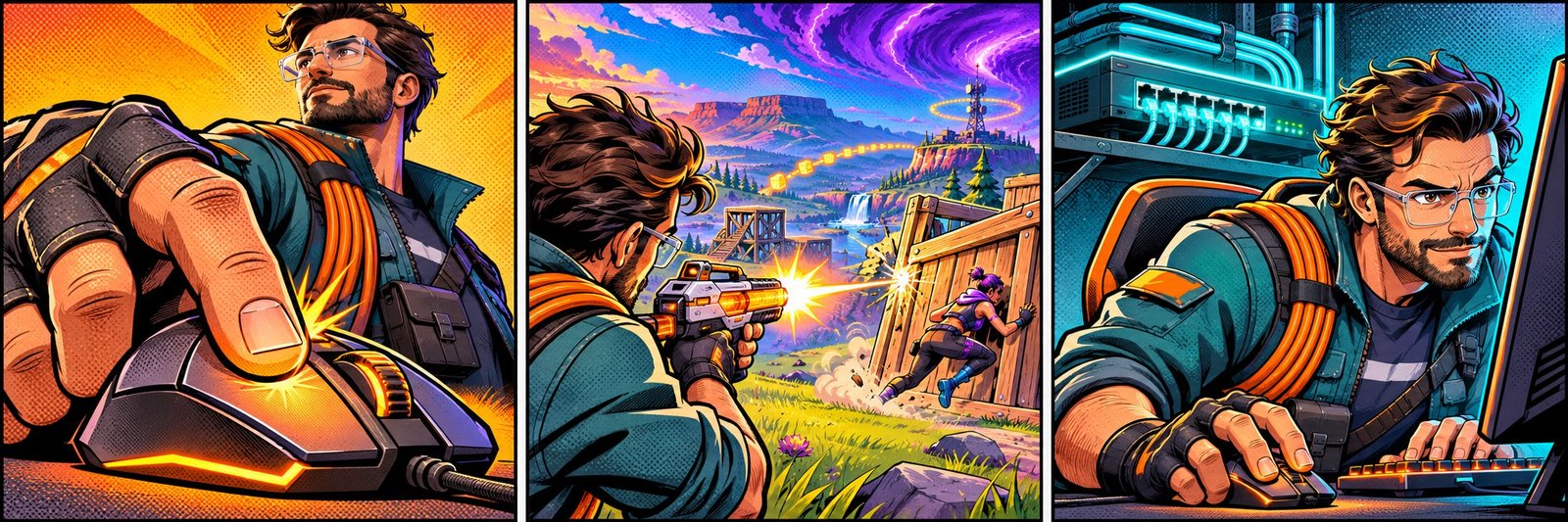
My mouse reports the click to my PC. The game processes the input and can show immediate feedback, like recoil or a flash. That makes firing feel responsive. Meanwhile the other player’s machine is drawing its own view of the encounter.
Online, we need a shared version of events. In a server-authoritative game, the server processes relevant actions against the game rules and sends updates back to the players. The two screens can briefly show different moments in the same fight.
That’s a simplified journey. Games can bundle actions into updates. A single click doesn’t give me a tidy little packet labelled “Anthony missed again”.
What travels in a network packet?
My PC passes data to its network interface. Ethernet carries it down a cable, or Wi-Fi carries it over the air to an access point. For a destination outside my home network, the next stop is usually my default gateway, the router.
The router forwards IP packets towards their destination. My ISP carries them onwards, sometimes through other networks before they reach the game service. Each router needs enough addressing and routing information to choose the next hop. It has no particular interest in who won the fight.
What’s inside a packet?
Think of an addressed envelope. An IP packet carries a header with information such as source and destination addresses, plus a payload. A capture can reveal packet lengths and arrival times even when the game data inside is protected.
Fortnite ping, jitter and packet loss
A speed test mostly answers how much data your connection can move per second. In a fight, I also care about when the next small update arrives.
- Ping · how long for a round trip?
- A Fortnite ping reading of 80 ms is an estimate of a trip to a game endpoint and back. Input processing, server work and rendering can add time before I see a result.
- Jitter · how consistent is the timing?
- Imagine round trips of 40, 42, 39 and then 170 ms. The spike can disturb a fight even if the average looks respectable.
- Packet loss · what failed to arrive?
- Missing updates can leave a client working with old information. Depending on how the game handles that gap, movement can appear to stutter or snap.
- Bandwidth · how much fits?
- A big upload can fill a queue and delay small game updates. More Mbps may help a saturated link. It won’t shorten the physical distance to a faraway server.
Frame rate is another clue. If my whole view judders while the network statistics stay steady, I check local frame times too. Two faults can feel surprisingly similar from behind a mouse.
From the island to the server cabinet
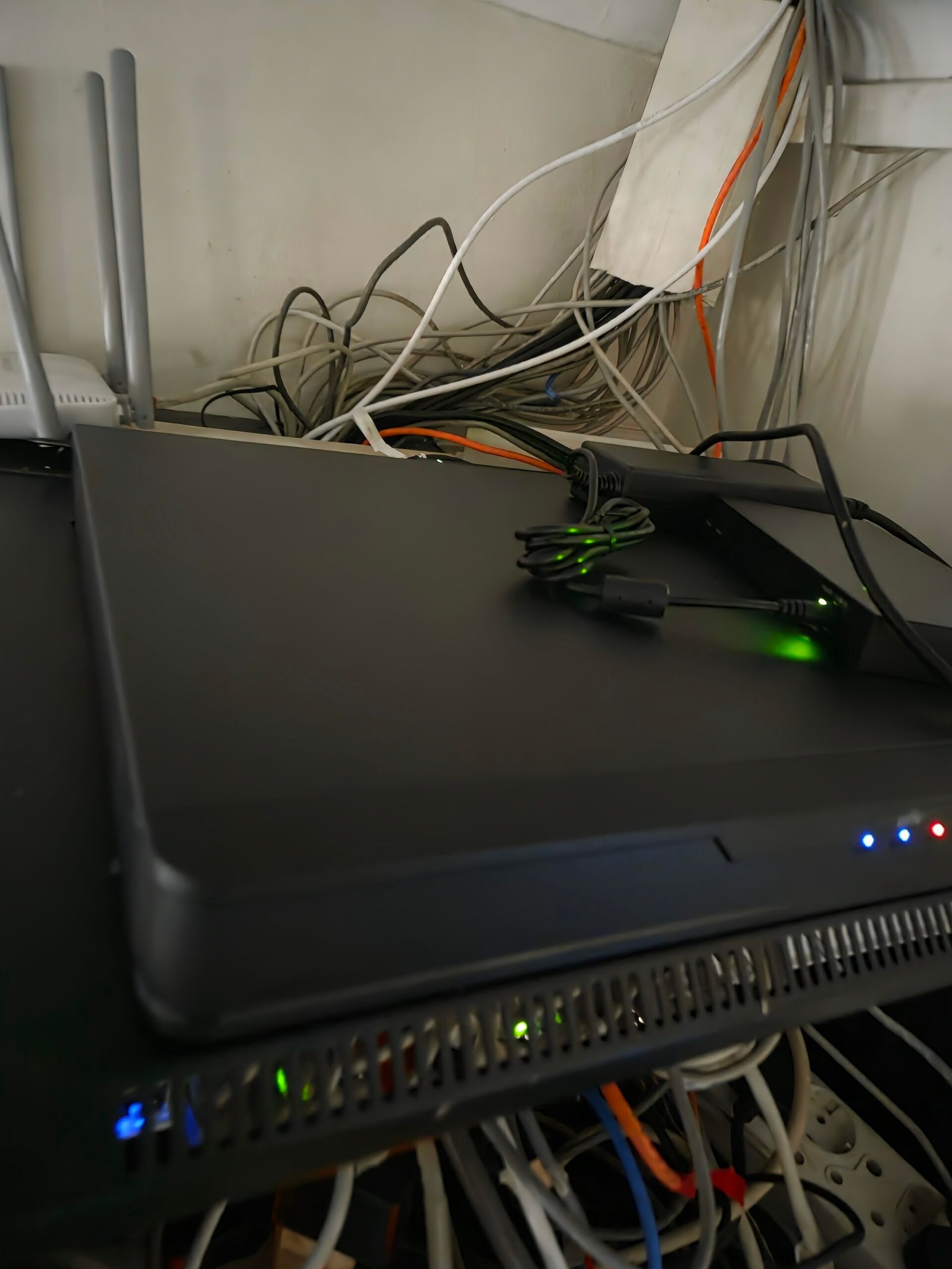
I once spent hours working through a client’s connectivity issue. The clue was a DNS change on the ISP side. Equipment was powered up and the link was active, yet a service people relied on still appeared broken.
DNS helps a device look up a service by name. It gives me a different line of enquiry when a game can’t connect at all than when I’m already playing and get a burst of packet loss. Asking when it fails saves a lot of random changes.
How to test your Fortnite ping in a match
- Take a baseline. In Fortnite, open Settings → Game UI. Under HUD, enable Net Debug Stats and apply the change. Epic’s packet-loss guide shows where to find it. Note the region, connection type, usual ping, visible spikes and reported loss. Mark the moment something feels wrong.
- Change one thing. If possible, switch the same PC from Wi-Fi to Ethernet. Keep the region and background traffic similar. Play another comparable session.
- Compare the bad moments. If spikes repeatedly disappear on Ethernet, investigate signal strength, airtime and interference. If both runs spike, look further along the path. One match is a clue. Repeat before calling it a fix.
Go deeper with Wireshark
On your own PC, choose the interface carrying the game traffic. Capture a short idle stretch and then a short stretch of play. Compare packet timing, lengths and traffic volume. Other applications share that interface, and encrypted or proprietary traffic limits what you can identify. A burst when you fired is a clue. It takes more evidence to identify the shot.
Back to that missed shot
The next time I watch someone duck behind cover just as I fire, I’ve got three places to look. What did my PC draw? How steady was the network? What update did the server send back? Sometimes I can measure enough to explain it. Sometimes I’ll have to admit the oke had better aim.
That’s what I love about networking. The same questions follow me from a Fortnite lobby to a warehouse cabinet. Where did the information need to go, and what can I actually observe along the way?
About Anthony Roux
I’m a South African technical lead working on business networks, servers and CCTV. I learned networking through gaming and LAN parties. I still think a match is a pretty good classroom.
Video coming soon
The YouTube companion to this article will go here. In the meantime, grab the worksheet and try the test in your next match.
Visit Anthony Roux IT on YouTube ↗